
Focused Guidance Helps Students Strengthen Weak Areas Step by Step
Mathematics has a habit of exposing small gaps at the worst possible moment. A student may understand percentages reasonably well, then struggle with algebra because an earlier idea about fractions never became completely secure. For families exploring nachhilfe mathematik wien unterstufe, targeted support can help identify those weak points before they begin affecting several subjects at once. Instead of treating every difficulty as a new problem, focused math classes look for the underlying skill that needs attention. That approach can make learning feel more organized and give students a clearer sense of why certain exercises have been difficult in the first place.
Targeted instruction works best when lessons respond to what the student actually knows, rather than following a rigid sequence regardless of progress. One learner may need extra practice with equations, while another may be comfortable with calculations but unsure how to approach word problems. A tutor can adjust explanations, examples, and practice tasks so that time is spent where it matters most. This makes each session more purposeful and helps students avoid the frustration of repeating material they already understand. At the same time, weaker topics receive enough attention to become more reliable, which can improve the way later concepts are understood.
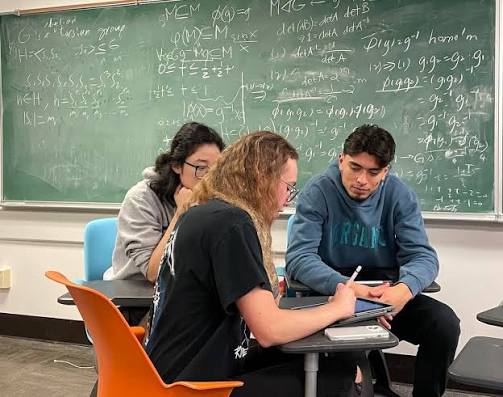
Another benefit is the development of stronger problem-solving habits. Mathematics is not only about remembering a formula, it is also about knowing when to use it and how to check whether an answer makes sense. Focused lessons can encourage students to slow down, identify the information they have, and choose a method before starting calculations. Mistakes become useful clues rather than something to hide. By reviewing where an error occurred, students can learn how to correct their reasoning and avoid making the same mistake again. These habits can support homework, tests, and future topics because they give students a repeatable way to approach unfamiliar questions.
Consistent progress also depends on confidence, and confidence usually grows from understanding rather than from quick praise. When students see that a difficult topic can be broken into smaller steps, they are more willing to attempt the next question. A tutor can set realistic challenges, give feedback at the right moment, and gradually reduce support as skills become stronger. This balance prevents students from becoming dependent on constant hints while still giving them enough guidance to keep moving. Over time, the student starts to recognize patterns, explain methods more clearly, and work with greater independence, which is a much more durable kind of success than memorizing a procedure for one test.
The most useful math support is the kind that keeps paying off after the lesson ends. With nachhilfe mathematik wien unterstufe, students can work on current school topics while also strengthening the foundation needed for the next stage of learning. Targeted classes make it easier to address weak areas early, practice important skills regularly, and build a more confident approach to problem solving. Progress may appear gradually, through fewer mistakes, better homework routines, or stronger participation in class, but those small changes can add up. Sustainable learning success comes from understanding how the pieces fit together and having the confidence to use that knowledge again when the next challenge appears.